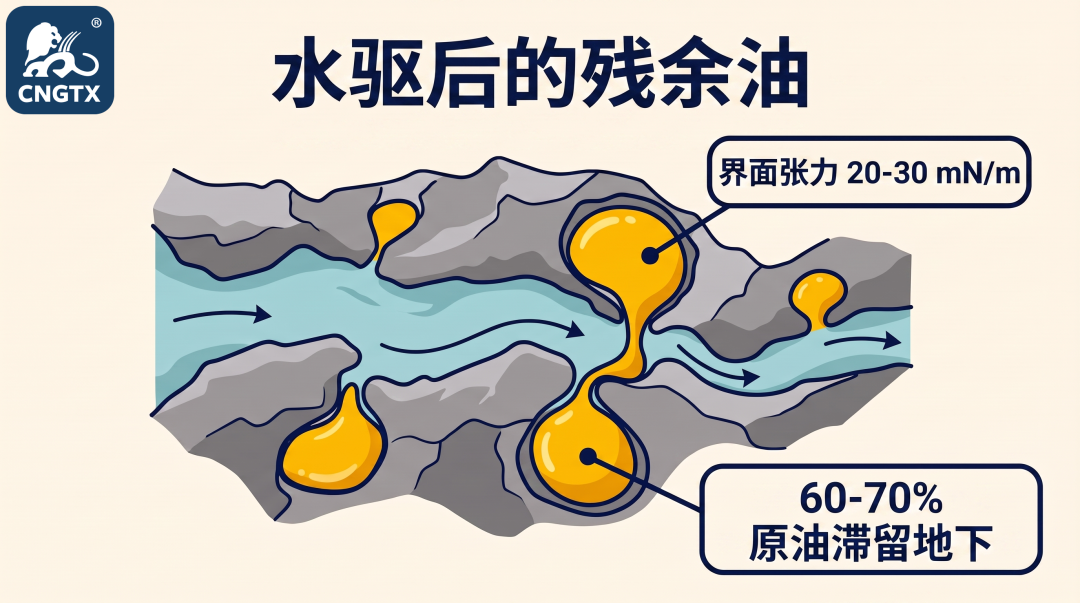
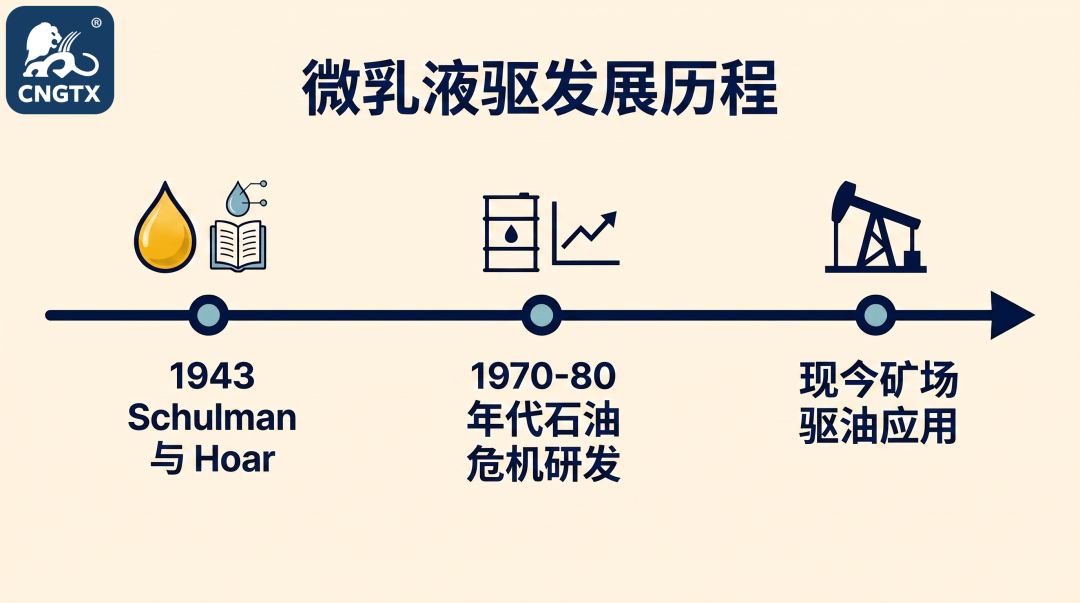
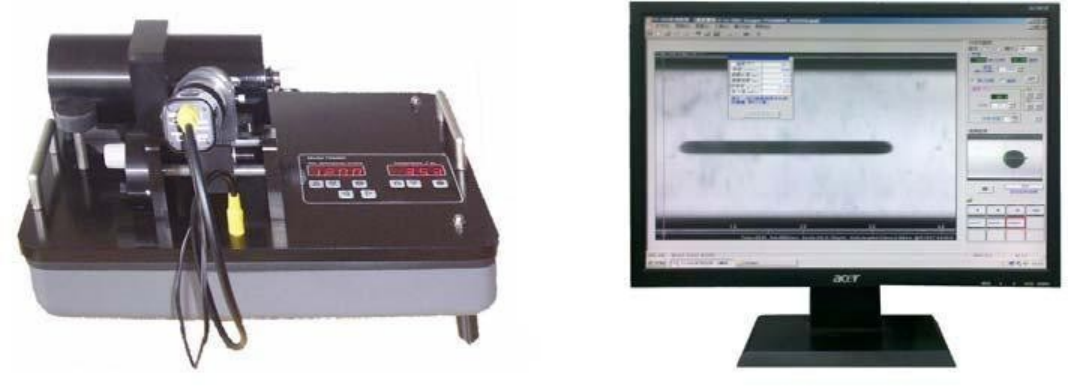
Part 1: Origins, Phase Behavior, and Advantages欢迎来到我们关于微乳液驱 (Microemulsion Flooding)与提高原油采收率 (Enhanced Oil Recovery, EOR)深度研究系列的开篇。在这一包含四个部分的综合报告中,我们将把复杂的热力学、流体力学和油田化学分解为直观且相互关联的模块,为您呈现一篇系统深入的系列长文。从基础理论到尖端现场应用,本系列旨在为行业专业人士和广大研究人员提供详尽的历史、理论和实践见解。通过这种引人入胜的连载形式,我们将把深奥的科学主题变得更加平易近人。在第一部分中,我们将深入探讨这一革命性技术的研究背景 (Research Background),开启我们的探索之旅。Welcome to the inaugural installment of our in-depth research series on Microemulsion Flooding and Enhanced Oil Recovery (EOR). In this comprehensive four-part report, we will break down complex thermodynamics, fluid mechanics, and oilfield chemistry into intuitive and interconnected modules, presenting a systematic, in-depth article series. From foundational theories to cutting-edge field applications, this series is designed to equip industry professionals and researchers with exhaustive historical, theoretical, and practical insights. By utilizing this engaging serialized format, we will make a dense scientific topic much more approachable. In Part I, we will dive deep into the Research Background of this revolutionary technology, embarking on our journey of exploration.全球能源需求的持续指数级增长与常规油气资源的日益枯竭,给现代石油工业带来了前所未有的双重压力。随着全球各大主力油田开发的不断深入,大多数油藏已经进入了高含水开发后期。诸如低渗透、特低渗透以及致密砂岩等非常规油藏,已经成为全球油气生产不可或缺的重要接替资源。然而,在这类极端复杂的地质结构中,传统的二次采油(注水开发)面临着无法逾越的物理瓶颈。由于多孔介质的孔喉半径极小,加之原油与注入水之间的油水界面张力极高,常规水驱后仍有高达 60%~70% 的原始地质储量以残余油的形式死死滞留在储层孔隙中。这种困境在工程上表现为“水注不进、液采不出”的突出难题,其本质是宏观波及效率与微观驱替效率的双重低下。面对这一严峻挑战,工业界迫切需要一种能够从根本上改变多孔介质中流体相态和微观渗流力学的新型三次采油 (Tertiary Recovery)技术。The continuous exponential growth of global energy demand, coupled with the gradual depletion of conventional oil and gas resources, has imposed unprecedented dual pressures on the modern petroleum industry. As the development of major global oilfields deepens, the vast majority of reservoirs have entered the late stages of high water-cut development. Unconventional reservoirs, such as low-permeability, ultra-low-permeability, and tight sandstones, have become indispensable replacement resources for global hydrocarbon production. However, within such extremely complex geological structures, traditional secondary recovery (waterflooding) faces insurmountable physical bottlenecks. Due to the minute pore-throat radii of the porous media, combined with the extremely high oil-water interfacial tension between crude oil and injected water, up to 60%-70% of the original oil in place remains tightly trapped in the reservoir pores as residual oil after conventional waterflooding. This dilemma manifests in engineering as a prominent problem of "injectivity failure and production stagnation," the essence of which is a dual inefficiency in both macroscopic sweep and microscopic displacement. Faced with this severe challenge, the industry urgently requires a novel Tertiary Recovery technology capable of fundamentally altering fluid phase behavior and microscopic seepage mechanics in porous media.从历史的宏观视角来看,微乳液 (Microemulsion)这一突破性概念最早由科学家 Schulman 和 Hoar 于 1943 年提出。在他们的开创性研究中,微乳液被明确描述为一种由水、油、表面活性剂 (Surfactant)及助表面活性剂自发形成的透明、各向同性且具有高度热力学稳定性的纳米分散体系。在 20 世纪 70 年代末至 80 年代初,受全球石油危机和能源短缺的强烈催化,西方各国及各大跨国石油公司(如 Marathon、Shell 和 Exxon)极大地加大了对提高采收率技术的研究与投资力度。正是在这一历史时期,微乳液驱 (Microemulsion Flooding)因其能够在苛刻地层条件下大幅降低毛细管阻力而受到了工业界和学术界的空前重视。作为一项基于严谨物理化学和热力学平衡理论发展而来的技术,微乳液驱巧妙地整合了表面活性剂驱、乳状液驱和胶束溶液驱的核心优势,被视作解决复杂油藏残余油开采的历史性突破口。From a macro-historical perspective, the breakthrough concept of the Microemulsion was first introduced by scientists Schulman and Hoar in 1943.1 In their pioneering research, a microemulsion was explicitly described as a transparent, isotropic, and highly thermodynamically stable nanoscale dispersion system spontaneously formed by water, oil, a Surfactant, and a co-surfactant. During the late 1970s and early 1980s, strongly catalyzed by the global oil crisis and energy shortages, Western nations and major multinational oil corporations (such as Marathon, Shell, and Exxon) drastically intensified their research and investment in enhanced oil recovery technologies. It was during this historical period that Microemulsion Flooding garnered unprecedented attention from both industry and academia due to its ability to significantly reduce capillary resistance under harsh formation conditions. As a technology developed on the basis of rigorous physical chemistry and thermodynamic equilibrium theories, microemulsion flooding ingeniously integrated the core advantages of surfactant flooding, emulsion flooding, and micellar solution flooding, and was regarded as a historical breakthrough for mobilizing residual oil in complex reservoirs.深入探究微乳液 (Microemulsion)的物理化学本质,其最为显著的特征在于其纳米级别的液滴尺寸(通常分布在 10 至 100 nm 之间)和优异的原油增溶能力。根据经典的 Winsor 相行为理论体系,微乳液在油水混合物中可分为三类主要的相平衡状态:Winsor I 型(下相,即水包油型)、Winsor II 型(上相,即油包水型)以及在提高采收率领域极为关键的 Winsor III 型(中相,呈现双连续网络结构)。当化学体系在特定的盐度或温度下达到 Winsor III 型相平衡时,微乳液相几乎富集了体系中全部的表面活性剂分子,并能够同时与过量的剩余油相和剩余水相稳定共存。这种中相微乳液被公认为驱油的最优体系,因为它不仅能够自发降低系统的吉布斯自由能,还能提供极强的原油溶解与携带能力,从而成为动用多孔介质深部微小孔隙中残余油的理想驱替介质。Delving into the physicochemical essence of a Microemulsion, its most prominent characteristics lie in its nanoscale droplet size (typically distributed between 10 and 100 nm) and its excellent crude oil solubilization capacity. According to the classical Winsor phase behavior theoretical framework, microemulsions in oil-water mixtures can be categorized into three main states of phase equilibrium: Winsor Type I (lower-phase, i.e., oil-in-water), Winsor Type II (upper-phase, i.e., water-in-oil), and the critically important Winsor Type III (middle-phase, exhibiting a bicontinuous network structure) which is vital in the field of enhanced oil recovery. When the chemical system reaches Winsor Type III phase equilibrium under a specific salinity or temperature, the microemulsion phase is enriched with almost all the surfactant molecules in the system and can coexist stably with both the excess residual oil phase and the excess residual water phase simultaneously. This middle-phase microemulsion is universally recognized as the optimal system for oil displacement, as it not only spontaneously lowers the Gibbs free energy of the system but also provides tremendous crude oil dissolution and carrying capacity, thereby becoming the ideal displacement medium for mobilizing residual oil in the deep, minute pores of porous media.在与传统采油化学剂的对比中,微乳液的优势展现得淋漓尽致。普通的宏观乳状液本质上属于动力学不稳定体系,在储层复杂的剪切流场和高温高盐环境中极易发生液滴聚并与破乳失效;而微乳液 (Microemulsion)则因其处于热力学最低能态,具备卓越的热力学稳定性,在经历长距离的地层运移和持续剪切后依然能够保持不分层、不破乳。这种长效的动力学与热力学稳定性,加上其纳米尺度的液滴,使得它能够轻易渗入致密储层中连水分子都难以流动的微小孔喉。它有效克服了传统聚合物驱因高分子链段过大而造成的机械降解、注入困难以及地层孔隙伤害等主要缺陷。In comparison with traditional oil recovery chemicals, the advantages of microemulsions are displayed to the fullest. Ordinary macroemulsions are essentially kinetically unstable systems, making them highly susceptible to droplet coalescence and demulsification failure within the complex shear flow fields and high-temperature, high-salinity environments of the reservoir. In contrast, a Microemulsion rests at the lowest thermodynamic energy state, possessing outstanding thermodynamic stability, which allows it to remain unstratified and emulsified even after long-distance formation transport and continuous shear. This long-term kinetic and thermodynamic stability, combined with its nanoscale droplets, enables it to easily penetrate minute pore throats in tight reservoirs where even water molecules struggle to flow. It effectively overcomes the major drawbacks of traditional polymer flooding, such as mechanical degradation, injection difficulties, and severe formation pore damage caused by excessively large polymer chain segments.随着我们对微乳液形成机理、相态转变规律以及热力学特性的认识不断走向成熟,我们不可避免地需要直面其在实际地下深处驱替残余油的动态物理过程。这就引出了本系列的下一个核心议题:这些看似柔弱的纳米级液滴,究竟是如何在坚硬而曲折的岩石孔隙中克服数十倍于自身的巨大毛细管阻力,从而将那些原本被判了“死刑”的石油一滴滴“洗”出来的?As our understanding of microemulsion formation mechanisms, phase transition laws, and thermodynamic properties continues to mature, we inevitably must confront the dynamic physical processes of how it displaces residual oil deep underground in reality. This leads us to the next core topic of this series: how exactly do these seemingly fragile nanoscale droplets overcome massive capillary resistance—dozens of times greater than their own force—within rigid and tortuous rock pores to "wash" out, drop by drop, the petroleum that had otherwise been given a "death sentence"?下期预告:第一部分至此圆满结束。在即将到来的第二部分中,我们将深入探索这项技术必须克服的核心物理挑战,并详细揭秘微乳液极为精密且高效的油气驱替机理 (Oil Displacement Mechanism)。敬请期待我们对超低界面张力流体力学效应的深度解剖,以及对测量这一极限物理量的尖端仪器的详细解读。 Next: This brings Part I to a successful conclusion. In the upcoming Part II, we will deeply explore the core physical challenges this technology must overcome and meticulously uncover the highly precise and efficient Oil Displacement Mechanism of microemulsions. Please look forward to our in-depth dissection of the fluid dynamic effects of ultra-low interfacial tension, as well as a detailed interpretation of the cutting-edge instruments used to measure this extreme physical quantity.