第四部分:掌控流变学,引领原油开采的新纪元
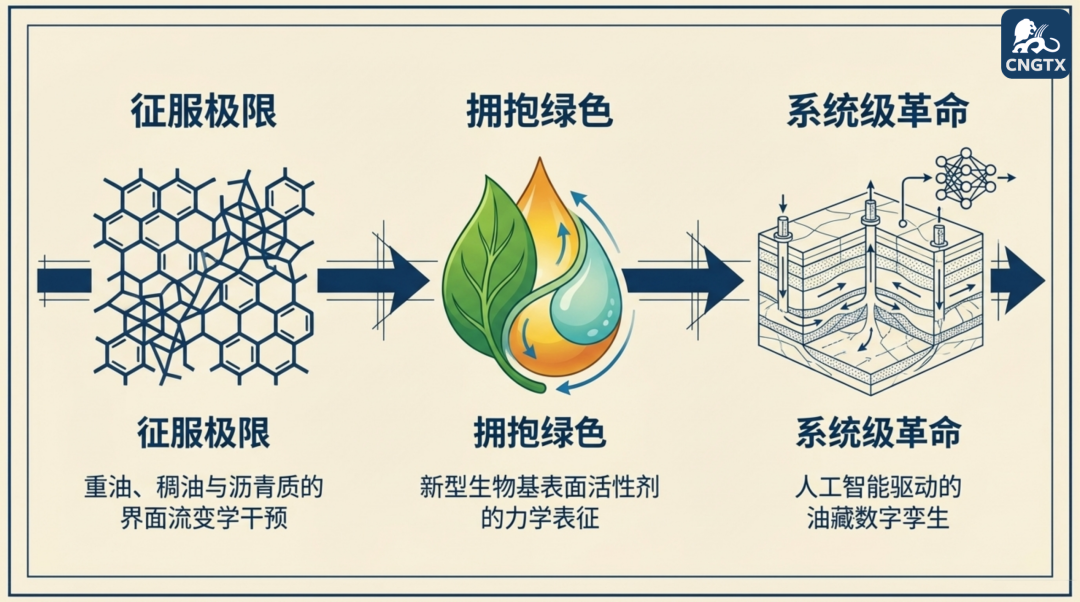
当我们凭借对界面扩张流变学的深刻理解,以及CNGTX旋转滴界面流变仪赋予的卓越量化能力,成功在常规油藏的提高原油采收率中取得突破后,全球的科研机构和能源巨头并未止步于此。作为跨越物理化学、系统工程与流体力学的综合体,我们深知,未来的油田开发面临的是极端条件下的“硬骨头”。下一个十年的战略方向和后续部署,将不可避免地围绕以下几个前沿阵地展开。
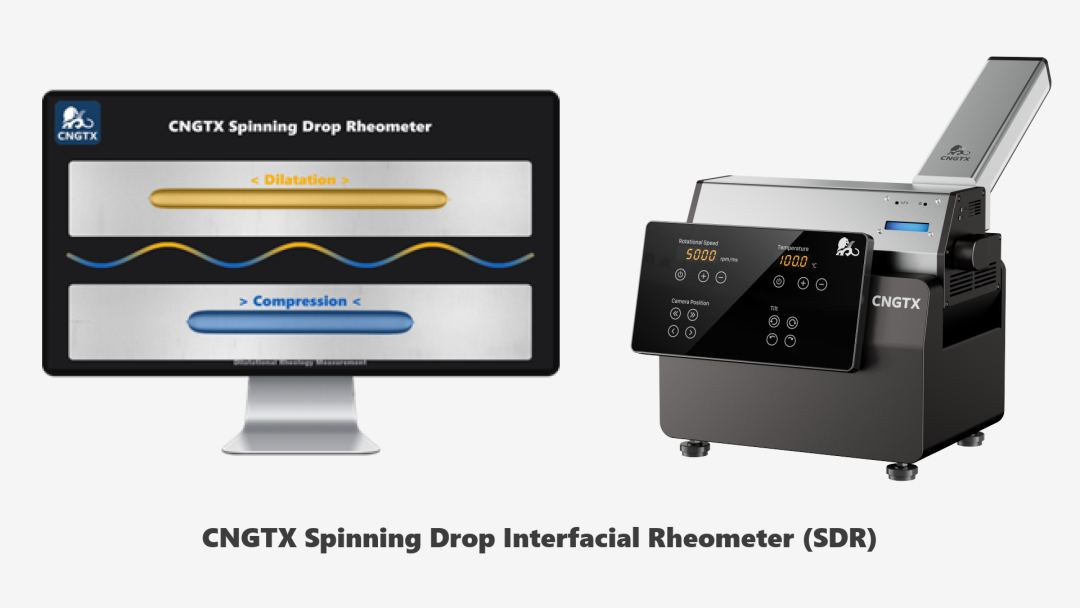
After successfully achieving breakthroughs in Enhanced Oil Recovery in conventional reservoirs—armed with our profound understanding of Interfacial Dilatational Rheology and the superlative quantification capabilities bestowed by the CNGTX Spinning Drop Interfacial Rheometer—global research institutions and energy giants have not rested on their laurels. As a synthesis spanning physical chemistry, system engineering, and fluid mechanics, we are acutely aware that future oilfield development faces "tough bones" under extreme conditions. The strategic direction and subsequent deployments for the next decade will inevitably unfold around the following frontier arenas.
征服极限:重油、稠油与沥青质的界面流变学干预

目前全球未开采的原油储量中,很大一部分是富含高分子量极性分子(如沥青质和胶脂)的重油和加拿大油砂。如第二部分所述,沥青质在油水界面上自组装成纳米聚集体,进而形成三维网络结构,产生极高储能模量(E') 和界面粘度。这不仅导致地下驱油困难,更在地面集输时形成顽固的油水乳状液,造成巨大的分离成本。
A significant portion of currently unextracted global crude oil reserves consists of heavy oils and Canadian oil sands, which are rich in high-molecular-weight polar molecules (such as asphaltenes and resins). As described in Part 2, asphaltenes self-assemble into nanoaggregates at the oil-water interface, subsequently forming three-dimensional network structures that generate desperately high Storage Modulus (E') and Interfacial Viscosity. This not only makes subterranean flooding exceedingly difficult but also creates stubborn oil-water emulsions during surface gathering and transportation, causing colossal separation costs.
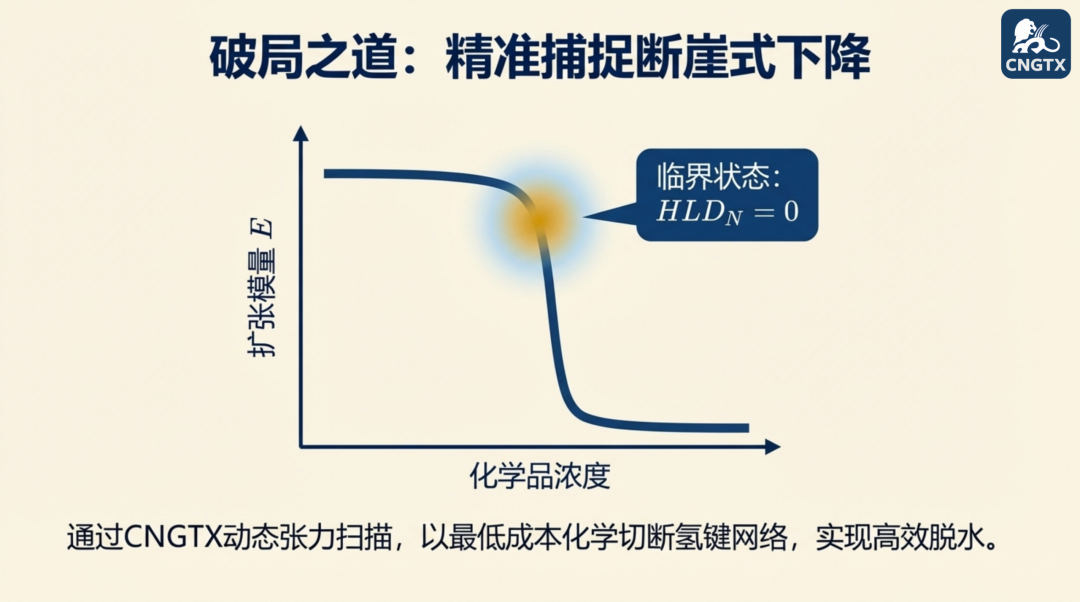
未来的研究将高度依赖CNGTX仪器的动态张力与时间谱图分析。工程师们将设计出体积更小、渗透性更强的“微型破乳剂”或极性溶剂,专门针对沥青质的氢键网络进行物理剪切或化学切断。通过在HLDN= 0附近进行流变学扫描,精准捕捉导致扩张模量(E) 发生断崖式下降的那个临界化学品浓度,从而以最低的成本“溶解”原油的这层微观锁子甲,实现高效的重油开采与原油脱水。
Future research will heavily rely on the dynamic tension and time-spectrum analyses of the CNGTX instrument. Engineers will design "micro-demulsifiers" or polar solvents with smaller volumes and stronger permeability, specifically targeting the hydrogen bond networks of asphaltenes for physical shearing or chemical severing. By conducting rheological scans near HLDN= 0, they will precisely capture the critical chemical concentration that causes a cliff-like plunge in the Dilatational Modulus(E), thereby "dissolving" this microscopic chainmail of crude oil at the lowest possible cost to achieve highly efficient heavy oil recovery and crude oil dehydration.
拥抱绿色的未来:新型生物基表面活性剂的力学表征

随着全球环保法规的日益收紧,传统的高污染石油磺酸盐和苯环类表面活性剂正逐渐被淘汰出局。取而代之的是更加环保、可生物降解的扩展表面活性剂以及源自植物或微生物的生物基表面活性剂。这些新型分子(例如带有聚环氧丙烷 (PO) 中间链段的分子)虽然对地层污染小,但其分子的松弛动力学异常复杂。
As global environmental regulations increasingly tighten, traditional highly polluting petroleum sulfonates and benzene-ring-based surfactants are gradually being phased out. They are being replaced by more environmentally friendly, biodegradable extended surfactants and bio-based surfactants derived from plants or microorganisms. Although these novel molecules (for instance, those possessing a Polypropylene Oxide (PO) intermediate chain segment) cause minimal formation pollution, their molecular relaxation kinetics are exceptionally complex.
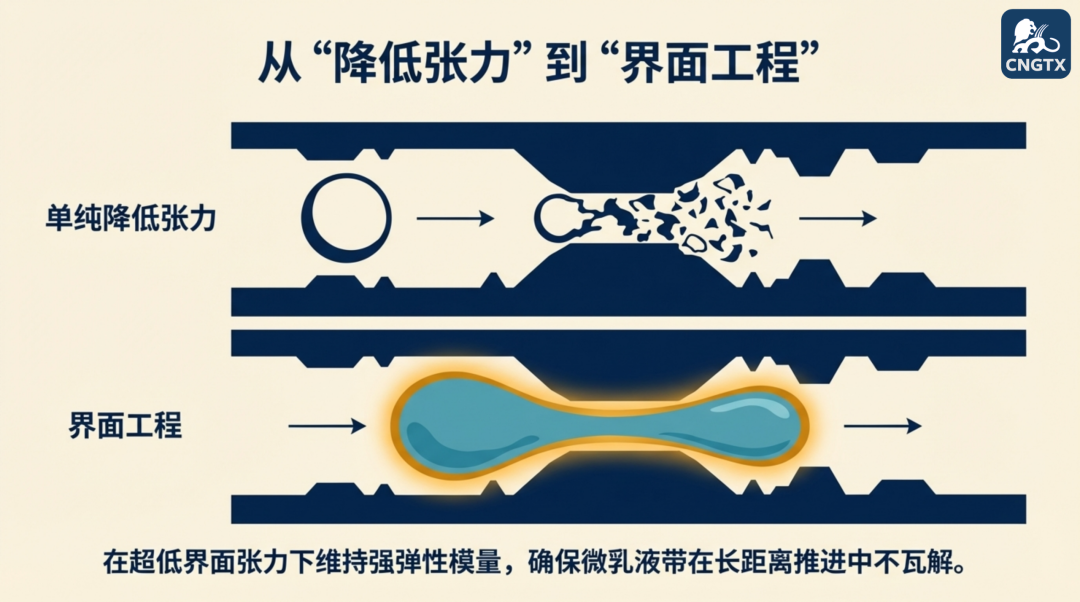
油田化学家必须重新构建新一代驱油剂的流变学数据库。通过CNGTX旋转滴界面流变仪施加不同频率的正弦振荡,我们能够深度剖析这些长链大分子的“慢松弛”特性。研究的重点将是从传统的“降低张力”转向为“界面工程”:即如何合成出既环保,又能通过分子间氢键或空间位阻效应,在超低界面张力下维持一定强度弹性模量的定制分子,以确保地下微乳液带在长距离推进中不会因地层剪切而瓦解。
Oilfield chemists must reconstruct the rheological database for the next generation of displacement agents. By applying sinusoidal oscillations of varying frequencies via the CNGTX Spinning Drop Interfacial Rheometer, we can deeply dissect the "slow relaxation" characteristics of these long-chain macromolecules. The research focus will pivot from traditional "tension reduction" to "interfacial engineering": specifically, how to synthesize bespoke molecules that are not only eco-friendly but can also, via intermolecular hydrogen bonding or steric hindrance effects, maintain a certain strength of Elastic Modulus under ultra-low interfacial tension. This ensures that the subterranean microemulsion bank will not disintegrate due to formation shear during long-distance propagation.
系统级革命:人工智能驱动的油藏数字孪生
流变学数据的真正价值,在于其与宏观油藏工程的无缝对接。在过去,界面流变学的图谱分析只能依赖几位资深科学家的直觉与经验。但在未来,这种模式将被彻底颠覆。
The true value of rheological data lies in its seamless integration with macroscopic reservoir engineering. In the past, the analysis of Interfacial Rheology spectra relied solely on the intuition and experience of a handful of senior scientists. But in the future, this paradigm will be thoroughly upended.
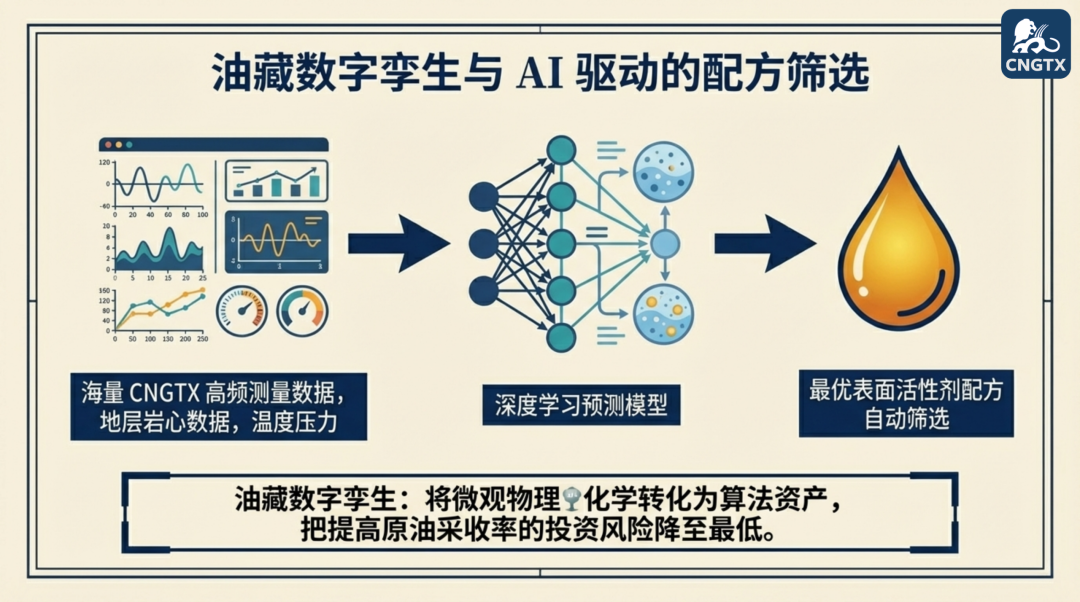
下一代的油藏系统工程将通过人工智能(AI)将海量的CNGTX高频测量数据转化为算法资产。通过建立“深度学习预测模型”,我们将能够输入地层岩心数据、地下温度压力以及流体性质,AI 将自动筛选并生成最优的表面活性剂配方。它将精准预测:在储层孔隙度变化时,应当如何调节注入液的损耗模量(E''),才能保证界面既具有足够的抗冲刷韧性,又保持了最优的聚并和排液能力。这种油藏层面的数字孪生技术,将把提高原油采收率的投资风险降至最低,从而在微观的纳米尺度到宏观的千米级采油场之间,建立起坚不可摧的桥梁。
Next-generation reservoir system engineering will utilize Artificial Intelligence (AI) to transform massive volumes of high-frequency CNGTX measurement data into algorithmic assets. By establishing "Deep Learning Predictive Models," we will be able to input formation core data, subterranean temperature and pressure, and fluid properties, allowing AI to automatically screen and generate the optimal surfactant formulations. It will precisely predict: as reservoir porosity changes, exactly how the Loss Modulus(E'') of the injected fluid should be adjusted to ensure the interface maintains sufficient toughness against flushing while preserving optimal coalescence and drainage capabilities. This reservoir-level Digital Twin technology will minimize the investment risk of Enhanced Oil Recovery, thereby forging an unbreakable bridge between the microscopic nanometer scale and the macroscopic kilometer-scale oilfield.
总篇结语
In this exhaustive report spanning macroscopic engineering and microscopic physiochemistry, we have completed a thrilling journey of knowledge exploration. We no longer view the oil-water interface as a simple geometric line, but rather dissect it as a living, "breathing" three-dimensional structure. Beginning with upending the archaic notion that "simply lowering tension is a panacea," we utilized the intuitive imagery of trampolines, springs, honey, and swings to break the cognitive shackles of rheological parameters. Subsequently, we established the CNGTX Spinning Drop Interfacial Rheometer as the ultimate equipment for unlocking the ultra-low tension code. All theoretical and instrumental innovations ultimately serve a singular, grand objective: to achieve more efficient, economical, and intelligent Enhanced Oil Recovery. Whoever masters the boundaries of micro-fluids holds the true key to unlocking the subterranean vaults of black gold. This in-depth series concludes here; thank you for your companionship and readership.